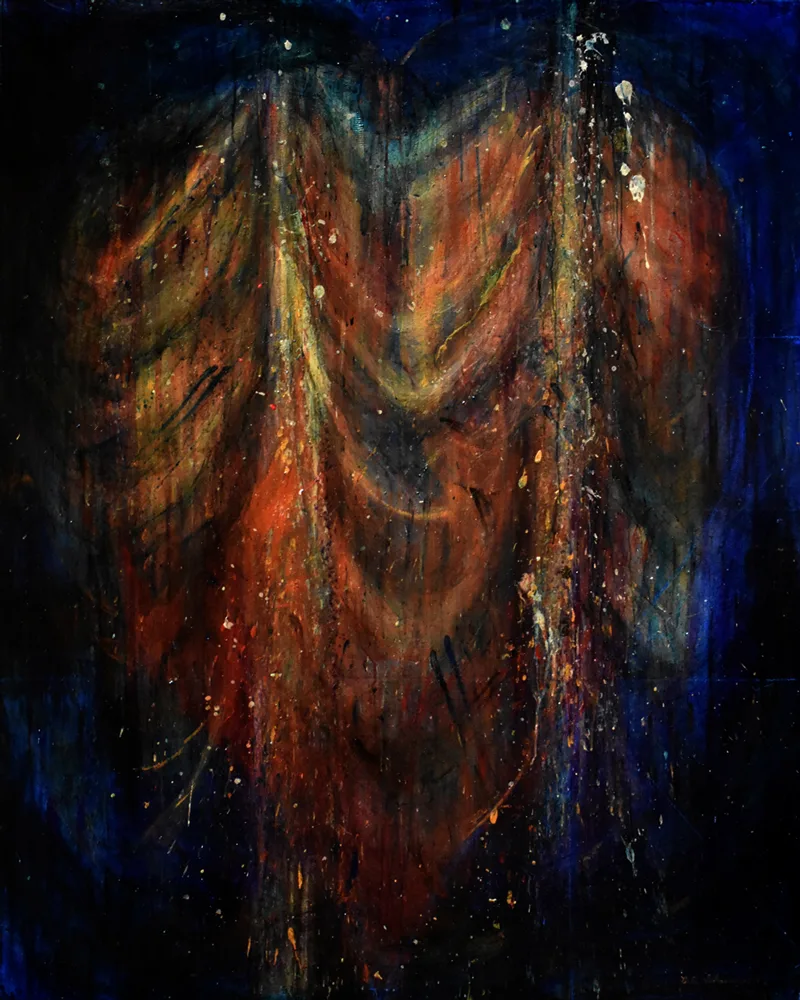
Shrouded Heart
The lower walls of the Sistine Chapel are painted with trompe-l'œil drapes, fabric that never existed, an illusionary covering to soften bare stone. Standing in the phenomenal beauty that adornes thet was this image that seeded the Shrouded Heart: the idea that what conceals can itself be beautiful, that the shroud is not simply an obstacle but a painting in its own right.
This work is part of a long series exploring the heart — not as sentiment, but as symbol and vessel. The heart as the seat of knowing, of life's navigation. What accumulates over it — grief, habit, the slow accretion of years — dims its light without extinguishing it. The painting holds both states: the clouding, and the light that persists beneath.
The series has always been interested in that process of clearing — not as sudden revelation, but as the patient work of attending to what lies under the shroud.